A gamma camera alone does not create a dependable nuclear cardiology service line. Nuclear cardiology equipment leasing can reduce the upfront financial commitment, but it does not automatically solve the clinical, operational, and regulatory work behind myocardial perfusion imaging (MPI) and nuclear stress testing. For a practice or facility planning to add cardiac imaging, the better question is not simply, “Should we lease equipment?” It is, “What level of support will let us deliver accurate, timely studies without creating a new operational burden?”
The answer depends on patient volume, available space, staffing depth, referral patterns, and the organization’s willingness to manage a highly specialized program internally. A lease may be the right fit for an established imaging department with experienced personnel and mature compliance processes. For many provider organizations, however, a fully managed mobile or fixed-site imaging solution offers a more practical path to bringing advanced cardiac testing closer to patients.
What Nuclear Cardiology Equipment Leasing Covers
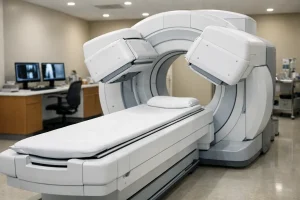
At its most basic, nuclear cardiology equipment leasing gives a healthcare organization access to imaging technology through recurring payments rather than a large capital purchase. The equipment may include a dedicated cardiac gamma camera, SPECT or SPECT/CT system, workstation, and related hardware needed to acquire and process MPI studies.
That structure can preserve capital for other priorities, such as physician recruitment, facility improvements, or expanded clinical services. It can also help an organization begin offering nuclear stress testing sooner than waiting for a capital-budget cycle.
Still, equipment is only one part of the program. A facility must also account for licensed nuclear medicine technologists, qualified cardiac stress-testing personnel, radiopharmaceutical coordination, quality control, preventive maintenance, image processing, PACS integration, protocols, documentation, and accreditation requirements. Leasing can make the scanner more accessible, but the facility remains responsible for these elements unless they are explicitly included in the service agreement.
This distinction matters because MPI is not a plug-and-play service. It requires disciplined workflows that support patient safety, image quality, physician confidence, and consistent turnaround times.
Leasing Equipment Versus Leasing a Complete Service
Organizations often use the word “leasing” to describe very different arrangements. A conventional equipment lease primarily finances the hardware. A managed imaging program delivers the equipment along with the people, processes, supplies, and accountability needed to operate the service.
With a conventional lease, the practice typically takes ownership of day-to-day operations. That may include hiring and scheduling staff, coordinating isotope doses, arranging service calls, maintaining quality-control records, building protocols, and preparing for accreditation surveys. This model can work well when nuclear imaging is already a core capability and volume is stable enough to support a dedicated program.
A turnkey model shifts much of that responsibility to an imaging partner. The provider organization can receive mobile imaging capacity at its location or establish a permanent fixed-site lab, while the partner manages the specialized infrastructure around it. This may include certified personnel, equipment maintenance, supplies, accreditation support, technical operations, and cloud-based PACS workflow integration.
The practical difference is significant. One model gives a facility equipment to manage. The other gives it a functioning imaging service designed around patient care and operational performance.
Start With Utilization, Not the Scanner
Before comparing lease payments, evaluate how many studies the organization can reasonably perform and sustain. Projected volume should reflect local cardiovascular demand, current referral leakage, physician schedules, payer requirements, patient travel patterns, and realistic ramp-up time.
A fixed-site installation may make sense for a hospital or high-volume cardiology group with predictable demand throughout the week. It gives the organization dedicated access and may support a larger service line over time. However, it also requires appropriate space, dependable patient flow, and a long-term commitment to operating the lab.
Mobile nuclear cardiology can be a stronger fit when demand is growing but does not yet justify a full-time permanent installation. A mobile unit can bring scheduled testing days directly to a practice, outpatient center, or rural facility. Patients receive care closer to home, while the organization adds diagnostic access without carrying the full burden of underused equipment.
There is no universal volume threshold that makes one approach correct. The right decision comes from matching capacity to actual demand, rather than purchasing or leasing more imaging capability than the practice can use efficiently.
Consider the Cost of Idle Capacity
A low monthly payment can look attractive until a scanner sits unused for much of the week. Underutilization affects more than the equipment cost. It can leave staff time, space, service contracts, and compliance obligations unsupported by exam revenue.
Conversely, insufficient capacity can push patients to outside facilities, delay testing, and weaken continuity of care. A flexible mobile schedule can provide a measured way to test demand before committing to a permanent lab. As volume grows, the program can evolve with it.
The Operational Requirements Behind Quality MPI
Accurate cardiac imaging depends on more than technology. Patient preparation, stress protocols, tracer timing, image acquisition, attenuation considerations, quality review, and timely interpretation all affect the usefulness of the final study.
Staffing is often the largest challenge for facilities considering nuclear cardiology equipment leasing. A program needs appropriately credentialed nuclear medicine professionals, as well as experienced personnel to support cardiac stress testing and respond appropriately to patient needs. Coverage plans are equally important. A program that relies on one individual without backup is vulnerable to cancellations and interruptions.
Compliance adds another layer. Organizations must manage radiation safety practices, equipment quality control, documentation, and accreditation standards. Requirements vary by facility type, state, payer, and the scope of services offered. Leadership should understand which responsibilities remain in-house and which are handled by the leasing or managed-service provider.
Maintenance and uptime deserve the same attention. A delayed service response can cancel a full day of patient appointments and disrupt referring physicians. Ask how preventive maintenance is scheduled, what happens when equipment is unavailable, whether backup capacity exists, and who coordinates patient rescheduling. These are operational safeguards, not minor contract details.
Questions to Ask Before Signing a Lease
A useful leasing discussion should extend beyond the monthly equipment price. Decision-makers should ask whether the agreement includes installation, acceptance testing, applications training, software updates, preventive maintenance, repair coverage, and end-of-term options. They should also clarify whether costs for shielding, site preparation, electrical work, network connectivity, and equipment removal are separate.
For nuclear cardiology specifically, the more important questions often concern the surrounding service. Who provides the technologists and stress-testing staff? Who manages radiopharmaceutical ordering and delivery? Who supports accreditation readiness? How will images move into the organization’s existing workflow? Who is accountable for technical quality and rapid diagnostic turnaround?
A clear answer to each question prevents a common problem: discovering after implementation that the lease covered the camera but not the work required to keep the program clinically ready each testing day.
Build Around the Patient Experience
For patients, a nuclear stress test can be unfamiliar and stressful. They are not evaluating the financing model, but they feel the results of every operational decision. Confusing instructions, long waits, repeated rescheduling, or staff who cannot clearly explain the process can make an already anxious appointment more difficult.
A well-supported program creates a calmer experience. Patients receive understandable preparation guidance, are greeted by experienced professionals, and have questions answered respectfully throughout testing. Referring providers benefit as well: they can expect consistent scheduling, reliable study quality, and results that help guide care.
This is where a managed approach can have value beyond cost predictability. By coordinating equipment, staff, workflow, and technical oversight through one relationship, the facility can focus on its patients and clinical decisions rather than assembling separate vendors for every part of the service.
Choose a Model That Can Grow With Your Practice
Nuclear cardiology equipment leasing is most effective when it supports a broader access and growth plan. For some organizations, that means leasing a permanent system and operating it with an experienced internal team. For others, it means starting with mobile capacity and a fully managed program that avoids major capital expense, staffing gaps, and maintenance worries.
NMA Imaging works with healthcare organizations that want to offer nuclear cardiology services without building every operational component on their own. The appropriate model should reflect the facility’s volume, footprint, goals, and readiness – not a one-size-fits-all equipment contract.
The strongest next step is to map the patient demand you have today, the capacity you need next year, and the responsibilities your organization is prepared to own. When those answers are clear, the right imaging arrangement becomes less about leasing a machine and more about creating dependable cardiac diagnostic access for the communities you serve.