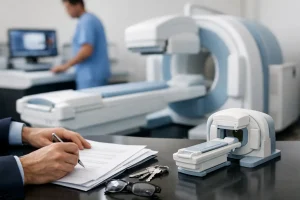
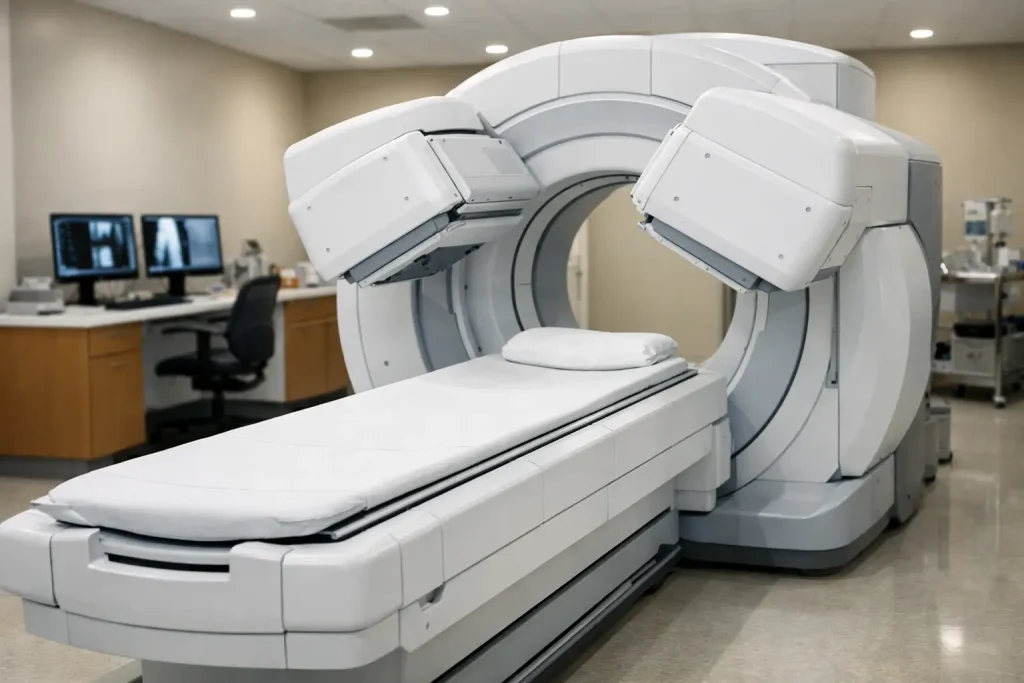
A fixed site nuclear imaging installation is not simply a camera placed in an available room. It is a long-term clinical program that must support reliable myocardial perfusion imaging (MPI), safe stress testing, consistent patient flow, qualified staffing, and compliant operations day after day. For practices with stable cardiac imaging demand, a permanent on-site solution can bring advanced diagnostics closer to patients while creating a stronger, more predictable service line.
The opportunity is meaningful, but so is the operational commitment. The best installation is built around how your team cares for patients, not just around where equipment can fit.
What a Fixed Site Nuclear Imaging Installation Includes
A permanent nuclear imaging lab combines far more than a gamma camera. The program must bring together the imaging system, stress-testing workflow, radiopharmaceutical coordination, clinical protocols, patient preparation, reporting pathways, quality controls, and ongoing maintenance. Each piece affects the patient experience and the reliability of the final study.
For a cardiology practice or outpatient facility, the goal is straightforward: provide high-quality nuclear stress testing without asking internal teams to become experts in every technical, regulatory, and administrative detail required to run the lab. That requires thoughtful planning before the first patient is scheduled.
Facility design is one early consideration. The imaging suite needs appropriate space, shielding, electrical capacity, patient changing areas, and a workflow that supports privacy and safety. Patients may move between check-in, stress testing, injection, uptake, imaging, and recovery. A layout that creates unnecessary walking, crowding, or handoffs can slow the schedule and add stress for patients who may already be worried about their heart health.
The installation must also support the clinical team. Nuclear medicine technologists need efficient access to equipment and supplies. Stress personnel need room to monitor patients, respond promptly to symptoms, and document the encounter. Physicians need a dependable path to image review and reports. When these workflows are planned together, the lab becomes easier to operate and easier for patients to understand.
When a Permanent Lab Makes Sense
A fixed-site model is often a strong fit when a facility has consistent MPI volume, a predictable referral base, and a clear plan to keep the schedule active throughout the week. Keeping testing on site can reduce the friction of sending patients elsewhere, help physicians maintain continuity of care, and support faster decisions after a concerning cardiac evaluation.
It can also strengthen the patient experience. A patient who already knows the practice may feel more comfortable completing a nuclear stress test in a familiar location with a coordinated care team. Clear instructions, compassionate staff, and a well-organized visit matter as much as the technical steps of the exam.
Still, fixed site is not automatically the right answer for every organization. A newer program, a rural location with fluctuating demand, or a practice testing only a limited number of patients each month may be better served by mobile capacity first. Mobile imaging can provide access without committing to a permanent room and a full-time operating model. Many organizations use it to validate demand before moving into a fixed-site program.
The decision comes down to utilization, facility readiness, growth goals, and the level of management support available. The question is not only, “Can we install equipment?” It is, “Can we sustain a high-quality program that patients and referring providers can depend on?”
The Operational Work Behind the Images
A nuclear cardiology lab succeeds when routine details are owned consistently. That starts with qualified clinical personnel. Nuclear medicine technologists, cardiac stress-testing staff, and interpreting physicians each play distinct roles in protecting patient safety and producing diagnostic studies. Staffing gaps can quickly disrupt schedules, especially when a facility relies on a small internal team with competing responsibilities.
Supplies and radiopharmaceuticals require the same discipline. Missed deliveries, incomplete patient preparation, scheduling errors, or delayed dose coordination can mean a lost appointment and an inconvenience for a patient who may have arranged transportation, taken time off work, or followed important fasting instructions. A managed program should anticipate those details rather than leave them for a busy front office to resolve on testing day.
Technology also has to fit the way your organization works. Image acquisition is only the beginning. Studies need to move through a secure PACS workflow, reach the appropriate physician, and return as clear reports in a timely manner. If staff are manually chasing images, reports, or records across disconnected systems, the clinical benefit of in-house testing can be diluted by operational delays.
Maintenance is another practical issue. Imaging equipment requires planned service, quality assurance, and prompt response when performance concerns arise. A camera that is unavailable can quickly create a backlog. For facilities that do not want to hire and manage specialized technical resources internally, a fully managed model can shift that burden to an experienced imaging partner.
Compliance Should Be Built Into the Program
Nuclear imaging is a regulated clinical service, and compliance cannot be treated as a final checklist item. Requirements may involve federal and state radiation regulations, licensure, radiation safety procedures, staff training, documentation, equipment quality control, and standards associated with the facility’s chosen accreditation pathway. The specific obligations depend on the site, state, services offered, and organizational structure.
Accreditation preparation deserves particular attention. It requires more than gathering policies shortly before an application or survey. Programs need evidence that their protocols, personnel qualifications, quality improvement activities, equipment records, and patient-care processes are being maintained in practice. Organizations that build these habits into daily operations are in a better position to protect quality and avoid last-minute administrative pressure.
A turnkey fixed site nuclear imaging installation can make this work more manageable when the provider takes ownership of the program’s technical operations, documentation support, staffing coordination, and accreditation readiness. That does not remove the facility’s responsibility for quality oversight, but it gives leadership a clearer operating structure and fewer loose ends.
Designing for Growth Without Adding Complexity
The financial case for a fixed site lab is not limited to reimbursement per study. It includes the ability to retain appropriate diagnostic services within the organization, reduce patient leakage, improve access, and create a more complete cardiovascular care experience. It also includes the costs that are easy to underestimate: equipment acquisition, build-out, service contracts, staffing coverage, supplies, compliance support, and downtime.
That is why the ownership model matters. Some organizations prefer to purchase equipment and build internal expertise. This approach can provide direct control, but it also places capital, maintenance, recruiting, and operational risk on the facility. Others choose a managed model that combines equipment, licensed staff, supplies, technical operations, and administrative support under one service relationship. The right model depends on volume, capital strategy, internal infrastructure, and tolerance for operational complexity.
For many practices, the most valuable outcome is capacity they can trust. If physicians know that testing can be scheduled promptly, performed by experienced professionals, and returned through a dependable reporting workflow, they can make referrals with confidence. That confidence supports adoption of the service line and makes growth more sustainable than a launch built on uncertain coverage or improvised processes.
NMA Imaging approaches permanent programs as a complete service rather than an equipment transaction. The focus is on helping facilities bring the lab to their patients with quality equipment, expert clinical staff, accreditation support, and ongoing technical management. That approach allows practice leaders to spend more time on patient care and strategic growth instead of coordinating the many moving parts behind nuclear imaging.
Questions Leaders Should Ask Before Moving Forward
Before committing to a permanent installation, leadership should examine referral patterns and realistic monthly volume, not just projected demand. They should evaluate whether the facility can support the physical requirements and whether the schedule will be organized around patient preparation, stress testing, imaging time, and report turnaround.
It is equally useful to define who owns each responsibility. Who confirms patient instructions? Who coordinates doses? Who covers staff absences? Who monitors quality control? Who manages equipment service? Who prepares accreditation documentation? Vague answers at the planning stage often become expensive problems after launch.
Finally, consider what experience the program should deliver. Cardiac patients need clear explanations, respectful pacing, and clinicians who can make a technically complex test feel manageable. A successful fixed-site lab is efficient, but it should never feel rushed or impersonal.
The right permanent nuclear imaging program gives a facility more than an on-site diagnostic capability. It gives patients a dependable place to receive specialized cardiac testing and gives clinical leaders a practical foundation for expanding care with confidence.